
Collagen supplements have become one of the most popular dietary supplements for supporting skin health, joint function, and overall wellness, with the global market reaching $4.7 billion in 2023. These oral collagen supplements contain hydrolyzed collagen peptides that are designed to support your body’s natural collagen production, which naturally declines by about 1% per year after age 25.
Collagen peptides are broken-down forms of the most abundant protein in your body, making up roughly 30% of total protein and 75% of your skin’s dry weight.
What This Guide Covers
This comprehensive guide covers the science behind collagen supplementation, different types of collagen products, evidence-based health benefits, and practical advice for selecting quality supplements. We’ll focus on what clinical research actually shows works, not marketing claims, and provide actionable steps for incorporating collagen into your routine.
Who This Is For
This guide is designed for adults considering collagen supplements for skin health, joint support, or overall wellness, whether you’re a complete beginner or looking to optimize your current supplementation routine. Whether you’re dealing with aging skin concerns, joint pain, or simply want to maintain healthy connective tissues, you’ll find science-backed guidance tailored to your goals.
Why This Matters
Your body’s collagen production naturally decreases after age 25-30, leading to visible changes in skin elasticity, joint comfort, and connective tissue health. With hundreds of collagen products on the market making varying claims, understanding the difference between effective supplements and marketing hype can save you money and help you achieve better results.
What You’ll Learn:
Collagen is the most abundant protein in the human body, providing structural support for skin, bones, joints, blood vessels, and connective tissues throughout your body.
This protein has a unique triple helix structure that gives tissues their strength, elasticity, and ability to maintain structure under stress. There are at least 28 types of collagen, with Types I, II, and III making up the majority found in skin, joints, and connective tissues.
The challenge is that your body makes collagen at a declining rate as you age. After age 25, collagen production decreases by approximately 1% annually, and this process accelerates due to factors like UV rays, poor diet, and oxidative stress.
Hydrolyzed collagen, also called collagen peptides, is regular collagen that has been broken down into smaller molecular weights (0.3 to 8 kDa) through enzymatic processing. This hydrolysis process makes the protein more digestible and bioavailable compared to whole form collagen found in bone broth or collagen rich foods.
When you consume collagen peptides, your body breaks them down in the digestive system into amino acids and small peptides, particularly proline, glycine, and hydroxyproline. These building blocks are then absorbed into the bloodstream and can reach target tissues where they may act as bioactive signals, stimulating your body’s own collagen production and supporting the synthesis of other proteins like elastin and hyaluronic acid.
This connects to supplementation effectiveness because the smaller peptide size allows for better absorption compared to consuming whole collagen proteins.
Type I collagen is the most common form, making up over 90% of your body’s collagen and is particularly abundant in skin, hair, nails, and bones. Most collagen supplements contain primarily Type I, which research shows supports skin hydration and elasticity.
Type II collagen, specifically undenatured type ii collagen, is found mainly in cartilage and joint tissues. Scientific research suggests this type is particularly beneficial for joint health and may help reduce joint pain in people with rheumatoid arthritis or osteoarthritis.
Type III collagen works alongside Type I in skin and blood vessels, contributing to skin elasticity and the structural integrity of organs and blood vessels.
Building on these collagen types, the form and source of your supplement determines which types you’ll primarily receive and their potential benefits.
Transition: Understanding these foundational concepts about collagen helps explain why certain supplement forms and sources may be more effective for specific health goals.
Current scientific research shows that taking collagen supplements can provide measurable benefits for skin health, joint function, and other aspects of wellness when used consistently over 8-12 weeks. While collagen provides structural support, for optimal hydration it’s powerful to combine it with other ingredients. Learn how collagen compares to hyaluronic acid in our detailed breakdown.
The evidence comes primarily from human studies using daily doses of 2.5-20 grams of hydrolyzed collagen or collagen peptides, with most benefits appearing after 8-12 weeks of consistent supplementation.
Clinical evidence demonstrates that oral collagen supplements can improve skin elasticity, increase skin hydration, and support reducing wrinkles. Multiple randomized controlled trials show statistically significant improvements in middle-aged women taking 2.5-10 grams daily of collagen peptides.
In one notable study, participants experienced a 13% reduction in wrinkles compared to the control group after 12 weeks of supplementation. The mechanism involves increased fibroblast activity that stimulates the synthesis of structural proteins including elastin and hyaluronic acid, resulting in improved skin structure.
Marine collagen peptides, in particular, show promise for skin hair and nails health due to their smaller molecular size and amino acid profile. The benefits work synergistically with vitamin C, which is essential for collagen synthesis, and many quality supplements include this nutrient.
Research on collagen supplementation shows promising results for joint health, particularly for people experiencing joint pain or osteoarthritis symptoms. Studies indicate that taking collagen supplements may help support joint health by providing amino acids needed for cartilage maintenance and repair.
Undenatured type ii collagen, specifically, has shown benefits in reducing joint pain and improving mobility in people with rheumatoid arthritis and osteoarthritis. The protein helps maintain cartilage structure and may reduce inflammation in joint tissues.
For bone health, Type I collagen supplements may help maintain bone density and strength, as bones are roughly 90% collagen by volume. This is particularly relevant for older adults who experience both declining collagen production and increased bone loss.
Evidence for hair growth and nail growth benefits comes primarily from the amino acid profile of collagen peptides, which provides proline and glycine that are abundant in hair and nail proteins. While direct research is limited, many users report improved nail strength and hair quality.
Emerging research suggests potential benefits for gut health, as collagen provides amino acids that may support intestinal lining integrity. Some studies also indicate possible benefits for muscle recovery and sleep quality, though more research is needed in these areas.
The protein content in collagen supplements (typically 8-10 grams per serving) can also contribute to overall protein intake as part of a balanced diet.
Key Points:
Transition: Understanding these evidence-based benefits helps guide supplement selection based on your primary health goals.

To help you get started, here is a featured product alongside a framework to easily add more collagen supplements in the future.
Lao Xie Zhen (by Hao Yi Kang) Collagen Beauty Essence is a premium collagen drink designed to support skin hydration, maintain skin elasticity, and promote healthy skin from within. It contains hydrolyzed collagen peptides combined with vitamin C and hyaluronic acid to enhance collagen production and skin health benefits.
Key Features:
This product is an excellent option for those looking for a convenient and effective collagen supplements that supports skin health and beauty.
This section is reserved for adding other collagen supplements as new products become available or as you explore different options. Future entries can include powders, capsules, and other liquid collagen products from reputable brands such as Vital Proteins, California Gold Nutrition, Kinohimitsu, and more.
Navigating the supplement industry requires understanding quality markers, dosing guidelines, and how to match supplement types to your specific health objectives.
The best collagen supplements combine effective ingredients, proper processing methods, and third-party testing to ensure both safety and efficacy.
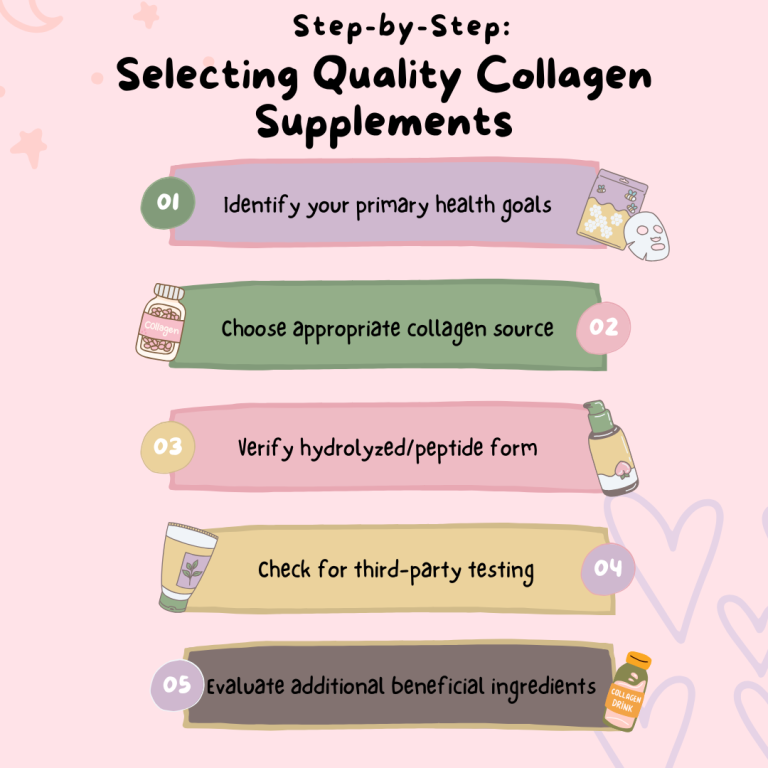
When to use this process: Before purchasing any collagen product to ensure you choose an effective supplement that matches your goals.
| Feature | Powder Form | Capsules | Liquid |
|---|---|---|---|
| Absorption Rate | High (direct mixing) | Moderate | High |
| Convenience | Requires mixing | Very convenient | Portable |
| Cost per Serving | Most economical | Higher cost | Highest cost |
| Taste | Customizable | Tasteless | Often flavored |
| Marine collagen typically offers smaller peptides and is suitable for those avoiding land-based animal products, while grass fed bovine collagen provides a complete amino acid profile at a lower cost. Chicken collagen is the primary source for Type II collagen supplements. |
Choose powder form for the best value and absorption, capsules for convenience, or liquid forms when taste preferences are important. Most vital proteins and other leading brands offer multiple forms to suit different preferences.
Transition: Even quality supplements require proper usage to achieve optimal results, which means addressing common implementation challenges.
Many people experience obstacles when starting collagen supplementation that can impact their results and long-term adherence to a routine.
Solution: Ensure adequate dosage (10-20g daily for skin benefits, 5-10g for joint support), consistent timing with meals, and maintain supplementation for at least 8-12 weeks for visible improvements.
Supporting factors include adequate hydration (collagen helps retain water) and sufficient vitamin C intake (minimum 60mg daily) to support collagen production in your body.
Solution: Start with smaller doses (5g daily), choose collagen sources that match your dietary restrictions (marine vs. bovine), and take supplements with food rather than on an empty stomach.
If you have shellfish allergies, avoid marine collagen peptides, and those with beef sensitivities should opt for marine or chicken-derived products. Consult healthcare providers for persistent digestive issues.
Solution: Focus on products with transparent labeling showing peptide molecular weight, third-party testing certificates, and clinical research backing rather than relying on marketing claims alone.
Red flags include products making unrealistic timeline promises (results in days rather than weeks), extremely low prices that suggest poor quality ingredients, or brands that don’t disclose their collagen source and processing methods.
Transition: With proper selection and realistic expectations, collagen supplementation can become an effective part of your health routine.
Quality collagen supplements can provide measurable benefits for skin elasticity, joint comfort, and overall wellness when chosen carefully and used consistently over 8-12 weeks. The key is selecting hydrolyzed collagen peptides that match your health goals while maintaining realistic expectations based on current scientific research.
To get started:
Related Topics: Consider exploring complementary nutrition strategies like maintaining a healthy diet rich in vitamin C and other nutrients that support collagen production, along with lifestyle factors like UV protection and adequate sleep that impact connective tissue health.
Recommended Daily Dosages by Health Goal:
Quality Evaluation Checklist:
Timeline Expectations: