Practical study, focus, nutrition and wellness tips for a more manageable exam season.
 Exam season can quickly turn into a cycle of long revision sessions, irregular sleep and last-minute cramming. But studying longer does not always mean studying better. A more effective approach combines focused revision techniques with enough sleep, regular meals, movement and realistic breaks.
This guide covers practical study methods, ways to maintain concentration and simple wellness habits that can make exam preparation more manageable — whether you’re heading into O-Levels, A-Levels, polytechnic finals, or university exams.
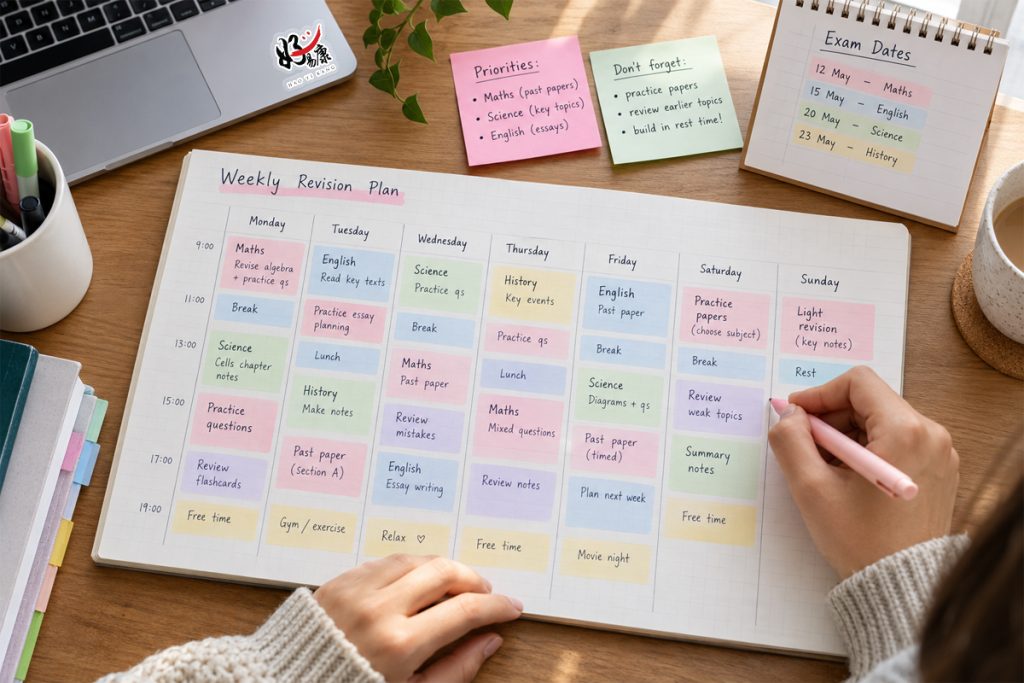
Before diving into revision, it helps to see the full picture. Start by listing your exam dates, then be honest about which subjects or topics need the most attention. From there, prioritise accordingly rather than treating every subject as equally urgent.
Break revision into manageable blocks instead of vague, open-ended sessions like “study biology today.” A block might cover one topic, one set of practice questions, or one chapter review. Build in buffer days for topics that take longer than expected, and resist the temptation to schedule every waking hour — a plan that leaves no room for rest rarely survives contact with an actual week.
A simple weekly timetable works better than an ambitious one you can’t stick to. For each week, map out:
Rereading notes can feel productive, but it’s one of the least effective ways to retain information. A few active study methods tend to work better for most students.
Active recall means retrieving information from memory rather than passively looking at it. In practice, this can look like flashcards, closed-book summaries written from memory, or answering questions without checking your notes first. The effort of recalling something is part of what helps it stick.
Instead of studying a topic once and moving on, spaced repetition means revisiting it again after a few days, then again after a longer gap. This spacing out of review sessions tends to build more durable memory than cramming everything into one sitting.
Practice papers are particularly useful for Singapore’s exam formats, helping students build confidence with timing, question styles, and exam expectations. Try timed practice under exam-like conditions, then mark your own answers honestly. Keeping an error log — a running list of mistakes and the topics behind them — makes it easier to see which weak spots to revisit before the real exam.
Explaining a concept out loud, or to a friend or family member, is a quick way to find the gaps in your own understanding. If you get stuck explaining something, that’s usually a sign it needs more review.
Long study sessions are only useful if you’re actually absorbing something. A few practical adjustments can help with focus:
There’s no single perfect session length that works for everyone. Many students find focused blocks followed by short breaks easier to sustain than several uninterrupted hours. Experiment with the length that allows you to stay engaged without feeling mentally drained — some find 25–30 minute blocks easier to start with, while others prefer 45–60 minute blocks for deeper revision.
It’s tempting to trade sleep for extra study time during exam season, but this usually backfires. A consistent sleep schedule supports concentration and memory far more reliably than an extra hour of tired revision. All-night cramming sessions are also difficult to sustain over multiple exams in a row, and the quality of studying tends to drop sharply once you’re running on too little rest.
Wind down before bed instead of going straight from intense revision to sleep. Preparing everything you need for the next morning in advance can also help you avoid a last-minute rush.
Food and hydration don’t need to be complicated during exam season — the goal is simply staying consistent and avoiding the extremes of skipped meals or excess caffeine.
Aim for balanced meals with a mix of protein, whole grains or starchy carbohydrates, vegetables or fruit, and healthy fats. Skipping meals to fit in more revision usually costs you more in concentration than it gains in study time.
Having simple snacks on hand — fruit, yoghurt, nuts, wholegrain crackers, or eggs — makes it easier to avoid reaching for less helpful options when hunger hits mid-revision.
Keep water within reach while studying. It’s an easy habit to forget during a long revision session, but an easy one to fix by simply keeping a bottle on your desk.
A moderate amount of coffee or tea is fine for most people, but it’s worth being mindful of excessive coffee, energy drinks late at night, and using caffeine as a meal replacement — all of which tend to catch up with you closer to exam day.
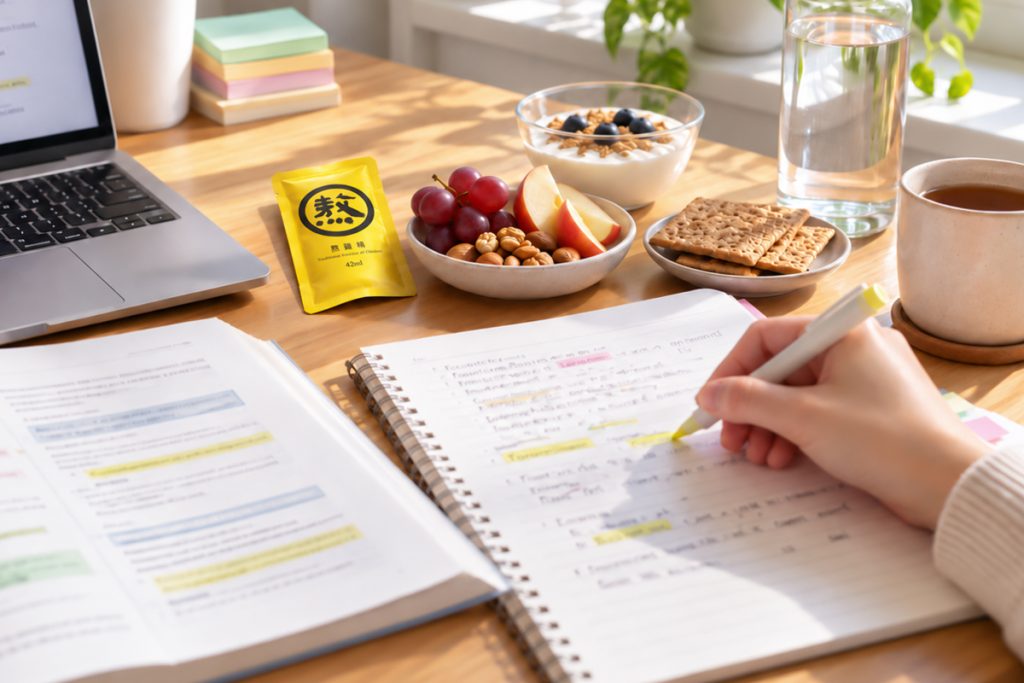
Some students and families in Singapore also include chicken essence as part of their exam-period wellness routine because it comes in a convenient, ready-to-drink format. It should be viewed as an addition to — not a replacement for — adequate sleep, regular meals, hydration and effective study habits.
Lao Xie Zhen (by Hao Yi Kang) Premium Boiled Essence of Chicken
A ready-to-drink format that fits easily into a busy revision schedule, without any preparation needed. Explore the Lao Xie Zhen (by Hao Yi Kang) Chicken Essence range to compare available pack sizes and formats.
If you’d like to understand the nutritional composition and research in more detail, read our guide to the science-backed benefits of chicken essence.

Timing tends to come down to personal routine rather than a strict rule. A few common patterns:
| Situation | Practical Timing |
|---|---|
| Morning revision | Before starting the study session |
| Afternoon revision | Before a planned focused study block |
| Exam day | At a familiar time, as part of the normal routine |
| Evening studying | Earlier in the study period if preferred |
For a more detailed breakdown by routine and time of day, see our guide to the best time to drink chicken essence.
Planning to make it part of a longer revision period? Read Can You Drink Chicken Essence Every Day? for frequency and moderation considerations.
Motivation can dip during a long revision period. This is a normal part of the process and nothing to worry about. A few practical ways to get moving again:
For the final stretch before an exam, a simple day-by-day structure can help keep the last week focused rather than overwhelming. This isn’t meant for learning a whole subject from scratch — it works best as a final-week review structure.
| Day | Focus |
|---|---|
| 7 days before | Map topics and identify gaps |
| 6 days before | Review weakest topics |
| 5 days before | Active recall + practice |
| 4 days before | Timed questions |
| 3 days before | Review mistakes |
| 2 days before | Consolidate notes + practice |
| 1 day before | Light review, organise materials, sleep |
| Exam day | Familiar routine, breakfast, hydration, arrive early |
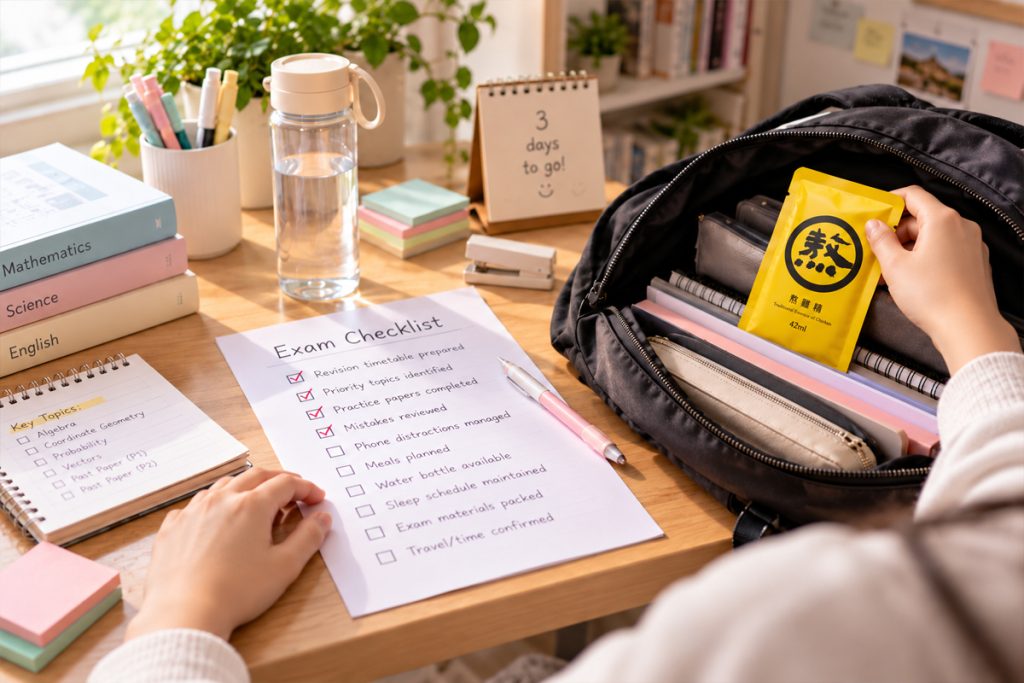
Good exam preparation starts with effective revision, regular meals, sufficient sleep and a routine you can realistically maintain. If chicken essence is already part of your family’s wellness routine, explore Lao Xie Zhen (by Hao Yi Kang) Premium Boiled Essence of Chicken and choose a pack size that fits your exam-season schedule.
Explore Chicken Essence | Read the Chicken Essence Timing Guide
Focus on active study methods like active recall, spaced repetition and practice papers rather than passive rereading, and build a realistic revision timetable that includes rest.
There’s no fixed rule — many students do well with focused blocks of 25–60 minutes followed by a short break. Experiment to find a length you can sustain without losing focus.
Remove notifications, study one subject at a time, use a quiet environment, and break tasks into smaller, clearly defined goals with timed focus blocks.
Regular, balanced meals with protein, whole grains, vegetables or fruit and healthy fats, plus easy snacks like fruit, yoghurt or nuts on hand for revision sessions.
A consistent sleep schedule in the lead-up to exams tends to support concentration and memory more reliably than sacrificing sleep for extra revision time.
This comes down to personal routine and when you naturally focus best — the more important factor is protecting consistent sleep around whichever time you choose.
Many students fit it in before a study session or as part of their regular exam-day routine. See our chicken essence timing guide for a more detailed breakdown.
For guidance on frequency and moderation, see our guide on drinking chicken essence every day.