A practical guide to balanced postpartum meals, traditional confinement foods and everyday nutrition.
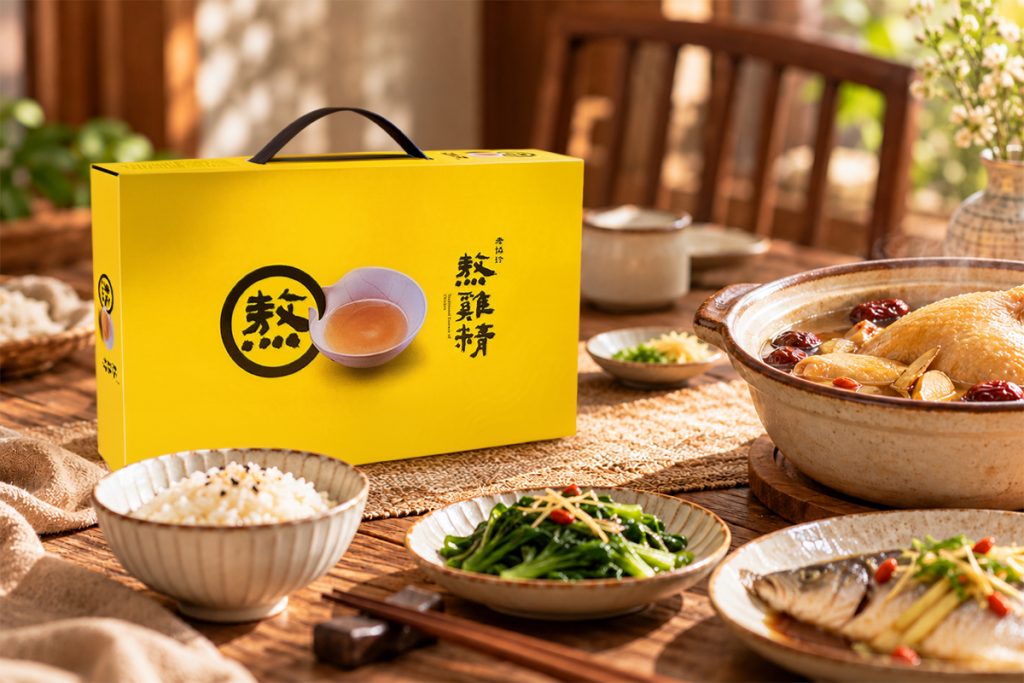
Confinement refers to a traditional postpartum period, commonly observed for around the first several weeks after birth, though the exact length and practices differ from family to family. Chinese confinement food commonly emphasises warm, cooked dishes and certain traditional ingredients such as ginger, sesame oil and rice wine, prepared with the belief that they support the mother’s recovery.
Traditional Chinese confinement practices may describe certain foods as “warming” or use them to address concepts such as “wind.” These are traditional frameworks rather than established nutritional classifications.
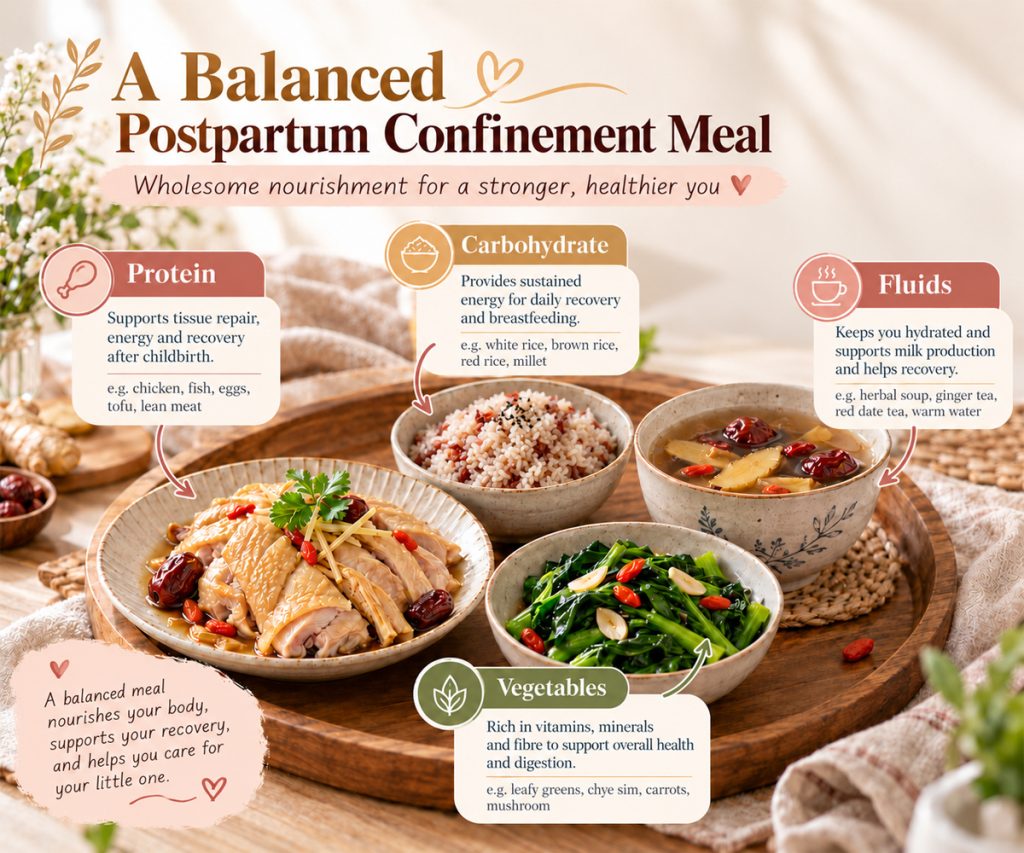
Rather than centering meals around one or two “recovery foods,” it helps to think in terms of a few simple categories that can be mixed and matched across your day.
Chicken, fish, eggs, tofu, lean meat, and beans or legumes are all useful protein sources. Protein can be included across meals rather than relying on a single food to carry the whole day’s intake.
Rice, brown rice, oats, noodles, potatoes and sweet potato all provide the energy needed during a physically demanding recovery period.
Variety is worth encouraging here, rather than unnecessarily restricting vegetables or fruit because they’re considered “cooling” in some traditional frameworks.
Nuts, seeds, sesame, avocado and appropriate cooking oils in reasonable amounts round out a balanced plate.
Water, soup, milk where suitable, and other unsweetened drinks all count toward staying hydrated during confinement.
Chicken, fish, eggs, tofu, lean meat, legumes and dairy where appropriate all offer useful protein for postpartum recovery. Rather than depending on one specific food, aim to include a source of protein in each main meal.
Many Singaporean families draw on a familiar set of traditional dishes during confinement. Here’s a quick look at some of the most common ones.
Ginger appears throughout confinement cooking, traditionally believed to support warmth and digestion, and used generously in soups and stir-fries.
A confinement staple, though worth keeping portions balanced since sesame oil dishes can be higher in oil than an everyday meal.
A well-known traditional dish, best thought of as one option among many rather than a compulsory postpartum food.
Warm, protein-rich soups are a common thread across most confinement meal plans, often served alongside rice and vegetables.
Red-date-based drinks and similar preparations are commonly included as part of the daily routine, valued as much for tradition as taste.
Herbal soups vary widely in their ingredients and strength.
Herbal ingredients vary widely. New mothers who are breastfeeding, taking medication or managing a health condition should check individual herbs with a qualified healthcare professional rather than assuming all traditional preparations are automatically suitable.
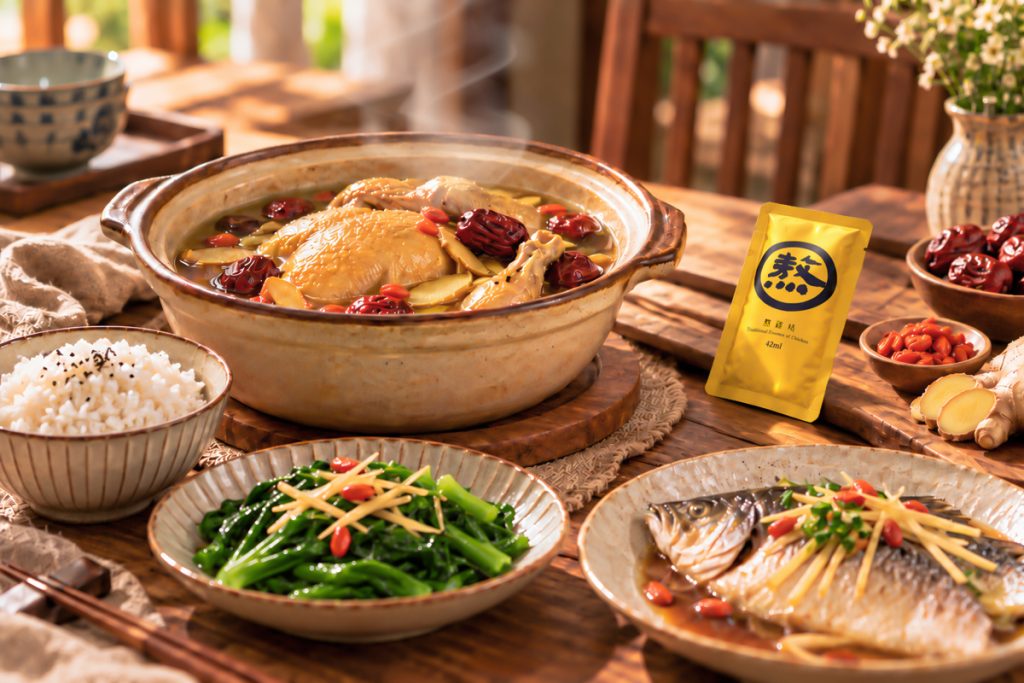
Some traditional confinement practices limit certain fruits and vegetables based on whether they are considered “cooling.” From a general nutrition perspective, however, variety remains important unless a healthcare professional has advised you to avoid a particular food. Vegetables and fruit provide fibre, vitamins, minerals and variety—nutrients that can be easy to miss when meals become repetitive.
A few nutrients are worth keeping in mind without turning meal planning into a micronutrient exercise.
Iron-containing foods: lean meat, eggs, beans, leafy greens.
Calcium-containing foods: milk or yoghurt where suitable, calcium-set tofu, certain fortified foods.
Omega-3-containing foods: appropriate fish choices.
Individual nutritional requirements vary after delivery, so these are general categories to draw from rather than fixed targets.
Water remains the primary hydration source throughout confinement.
Soups are a useful part of meals, but shouldn’t replace drinking fluids on their own.
Traditional drinks such as red-date preparations and similar herbal drinks can be discussed as cultural options alongside your regular fluid intake.
Caffeine is best kept moderate, particularly where breastfeeding is relevant.
Some traditional confinement recipes use rice wine or other alcoholic ingredients. If you are breastfeeding, taking medication or recovering from a medical procedure, check with your healthcare professional about what is appropriate for you. Avoid assuming that cooking completely removes all alcohol.
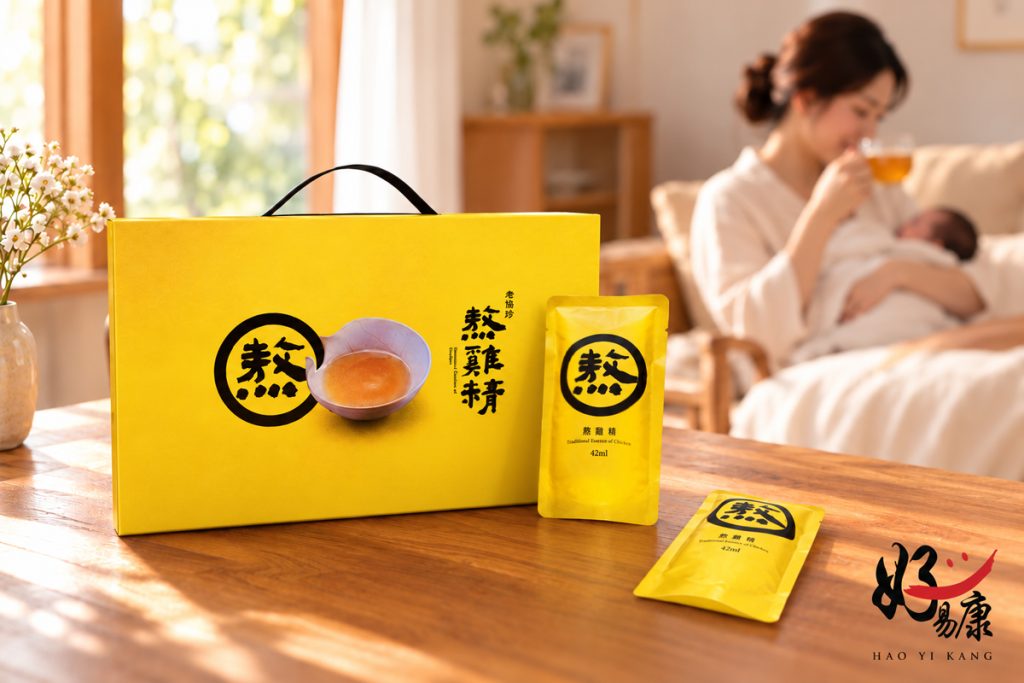
Chicken essence is another familiar product in many Singapore households during the postpartum period. Its ready-to-consume format can be convenient when preparing a full meal is difficult. However, it is best viewed as a complement to, rather than a replacement for, balanced meals, adequate fluids and sufficient rest
Lao Xie Zhen (by Hao Yi Kang) Premium Boiled Essence of Chicken — a ready-to-drink option some families include as part of their confinement routine.
Mothers who are pregnant, breastfeeding, taking medication or managing a health condition should consider their individual circumstances and consult a qualified healthcare professional as appropriate.
If you are pregnant, breastfeeding or specifically considering chicken essence around childbirth, read our guide to chicken essence during pregnancy and postpartum for more detailed considerations.
For a broader explanation of the product itself, see our science-backed guide to chicken essence benefits.
Individual circumstances vary, so this is worth thinking of as “approach with care” rather than a strict avoid list.
This is an example rather than a prescribed postpartum diet — use it as a starting template to adapt to your own preferences.
| Meal | Example |
|---|---|
| Breakfast | Oats with egg, fruit and a warm drink |
| Mid-morning | Yoghurt or fruit |
| Lunch | Steamed fish, rice and cooked vegetables |
| Afternoon | Nuts, fruit or another simple snack |
| Dinner | Chicken soup, tofu/vegetables and rice |
| Optional | Chicken essence as a convenient addition where suitable |
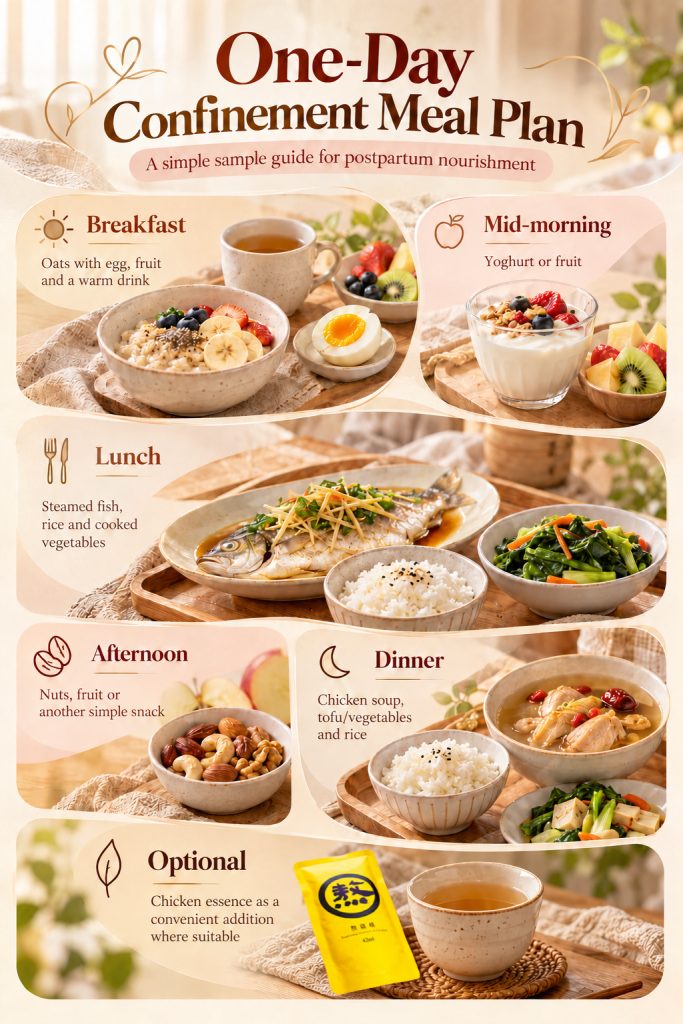
Rather than 21 individual recipes, here’s a rotation of main-dish ideas you can adapt to your own cultural preferences and what’s available.
| Day | Main Protein | Vegetable / Side | Soup / Accompaniment |
|---|---|---|---|
| Day 1 | Ginger chicken | Spinach | Vegetable soup |
| Day 2 | Steamed fish | Broccoli | Tofu soup |
| Day 3 | Sesame chicken | Bok choy | Mushroom soup |
| Day 4 | Lean pork/tofu | Mixed vegetables | Red-date-based drink if preferred |
| Day 5 | Fish | Pumpkin | Chicken soup |
| Day 6 | Eggs/tofu | Leafy greens | Vegetable broth |
| Day 7 | Chicken | Carrots & mushrooms | Light soup |
Friends and family who want to help can also consider practical postpartum support or a thoughtful confinement gift that reduces the new mother’s day-to-day workload.
General confinement-food advice cannot account for individual medical circumstances. A few situations where it’s worth checking in with a professional:
If you have specific nutritional or recovery needs after delivery, your doctor or dietitian can help tailor your diet appropriately.
Confinement meals do not need to follow one rigid formula. Aim for varied, balanced meals built around protein, vegetables, carbohydrates, fluids and foods that fit your preferences and cultural traditions. If chicken essence is already part of your family’s routine, Lao Xie Zhen (by Hao Yi Kang) Premium Boiled Essence of Chicken offers a convenient ready-to-consume format.
Looking for a thoughtful confinement gift for a new mum? Explore our practical gift ideas for new mums in Singapore.
Explore Chicken Essence GiftsRead the Pregnancy & Postpartum Guide
A mix of protein (chicken, fish, eggs, tofu), carbohydrates (rice, oats, sweet potato), vegetables and fruit, healthy fats, and plenty of fluids — traditional confinement dishes can fit naturally into this balance.
Ideally a source of protein, a carbohydrate, vegetables or fruit, and fluids at each main meal, rather than relying on one “recovery food” to do everything.
No single rigid menu is required. Traditions and preferences vary by family, and a varied, balanced approach generally works better than one fixed formula.
Yes — variety in fruit and vegetables remains generally useful for fibre, vitamins and minerals, unless a healthcare professional has advised otherwise for your situation.
Raw or undercooked foods, high-mercury fish, excessive sugar, very salty processed foods, excessive caffeine, alcohol, and unverified herbal products are worth approaching with extra care.
Moderate caffeine is generally the practical guideline, particularly if you’re breastfeeding — check with your healthcare provider if you’re unsure what’s appropriate for you.
Many families include it as a convenient addition to meals. For pregnancy and postpartum-specific safety considerations, see our chicken essence during pregnancy and postpartum guide.
Confinement food reflects cultural tradition as much as nutritional necessity. What matters most nutritionally is a varied, balanced diet — traditional confinement dishes are one way of achieving that, not the only way.
Practices vary by family, but confinement is commonly observed for around the first several weeks after birth.